AI Risk Manager:
Know Your Supplier Risks
Before They Escalate
LeanLinking’s AI Risk Manager continuously analyses internal supplier data alongside live external intelligence to identify emerging risks across your supplier network. Understand where risk is coming from, prioritize suppliers that need attention, and turn insights into action.
Continuous Supplier Risk Intelligence
LeanLinking’s AI Risk Manager continuously analyses your supplier portfolio to provide a clear, current view of supplier risk. It combines your existing supplier data with external intelligence to identify emerging risks, explain what is driving them, and help your team decide where to act.
AI-Powered Risk Scoring
See an overall risk score and level for every analysed supplier, from Very Low to Very High, so your team can quickly identify which suppliers require attention.
Understand What Is Driving Risk
Risk is broken down by individual areas, including compliance, performance, non-conformances, financial signals, and geopolitical exposure. This helps teams understand not only how much risk exists, but where it is coming from.
Actionable Risk Insights
Review concrete findings from a complete AI risk assessment. Each risk contains a probability, an impact rating, supporting data sources, and suggested next steps your team can act on immediately.
The Problem with Traditional Supplier Risk Management
Supplier risk rarely appears all at once. Performance issues, compliance gaps, financial warnings, quality incidents, or geopolitical developments can build over time while periodic reviews still show an incomplete picture.
AI risk management helps procurement teams identify these signals earlier and understand which suppliers require attention.
Periodic Risk Reviews
Manual assessments provide a snapshot in time, leaving teams with limited visibility between reviews.
Fragmented Information
Performance, compliance, quality, and external intelligence often sit across separate sources, making emerging patterns difficult to identify.
Reactive Risk Management
When warning signs are identified too late, procurement teams have less time to investigate, mitigate, and respond.
From Supplier Data to Proactive Risk Management
AI Risk Manager brings supplier information together, analyses risk across your network, and helps procurement teams turn identified risks into structured follow-up.
Risk Management & Action
Turn AI-powered risk insights into action before supplier issues escalate.
LeanLinking brings AI Risk Management helps teams move seamlessly from identifying potential risks to managing, mitigating, and resolving them.
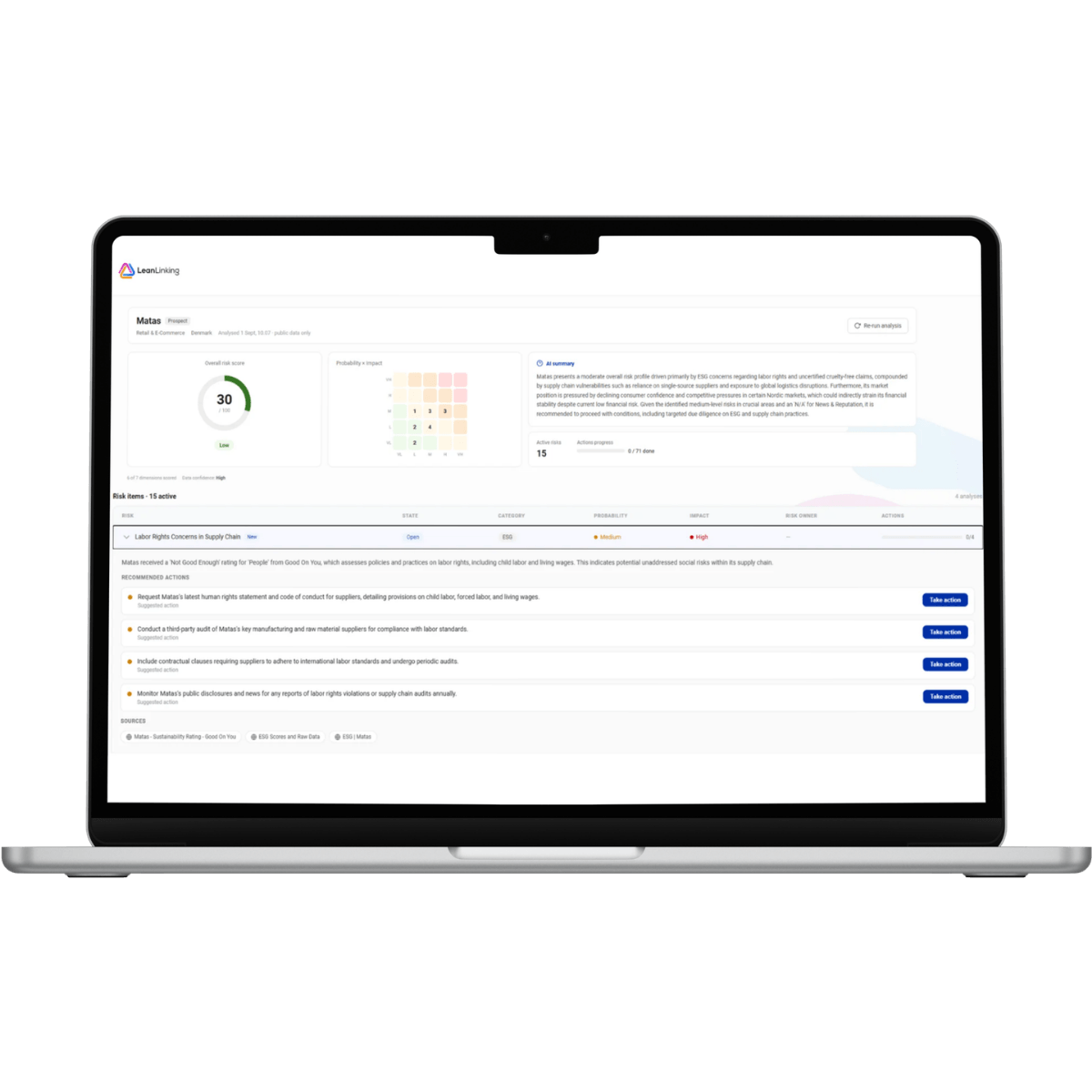
Assign clear ownership, investigate individual findings, and transform AI-recommended actions into structured follow-up activities linked directly to the supplier. Instead of risk insights sitting in reports or dashboards, your team gets a clear path from insight to ownership to action.
Every identified risk can be tracked as Open, In Progress, Resolved, or Dismissed, giving teams complete visibility into what requires attention, what is already being addressed, and what has been resolved.
The result is a more proactive approach to supplier risk, where emerging issues are easier to prioritize, responsibilities are clear, and your team can act with confidence before risk becomes disruption.
AI Risk Analysis
Turn complex supplier data into a clear picture of where risk is emerging and what deserves attention first.
Run AI risk assessments automatically on a daily, weekly, or monthly schedule, or whenever your team needs an updated view.
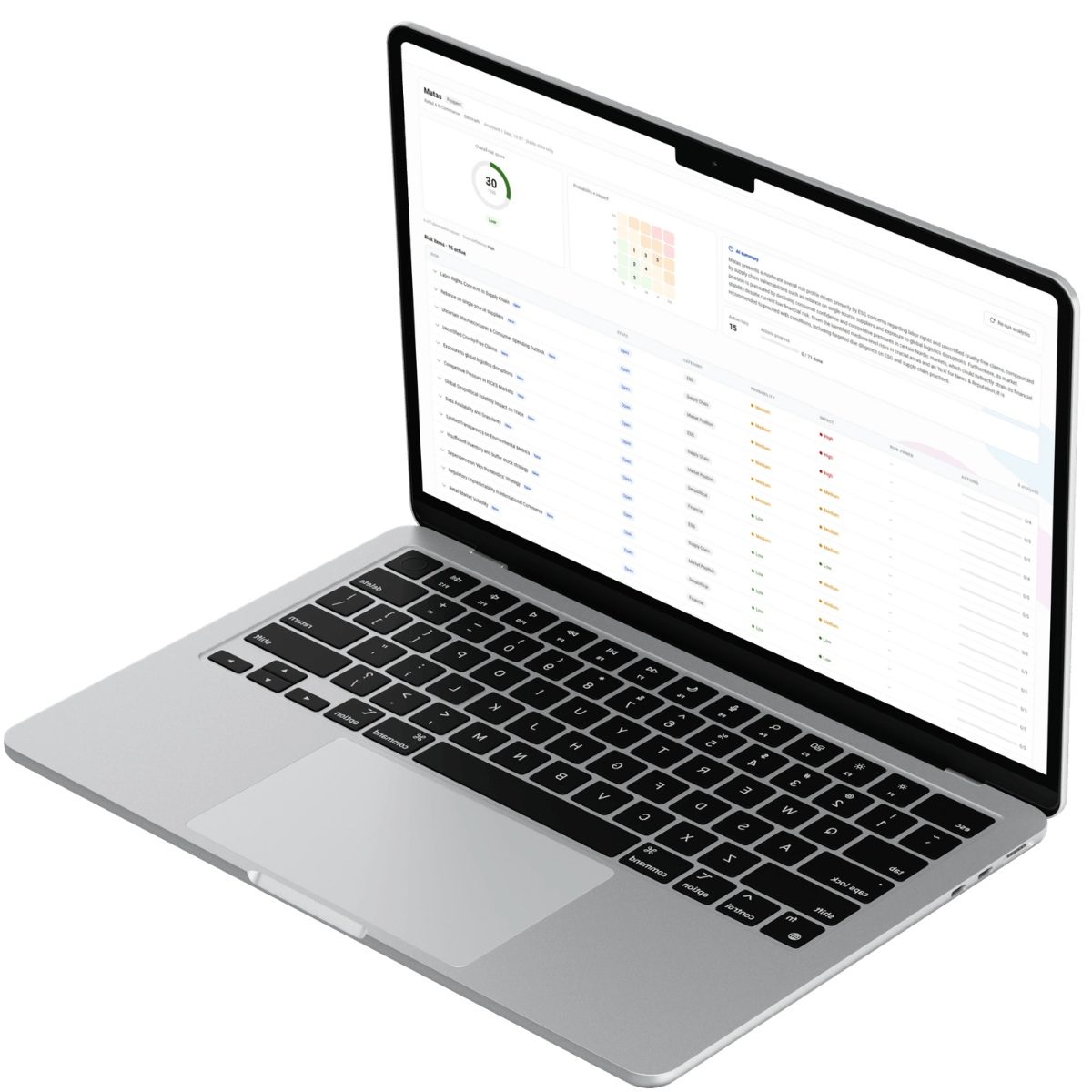
For every supplier, AI Risk Manager evaluates the selected risk areas, identifies findings, and prioritizes by severity, helping your team focus their attention where it can have the greatest impact.
Each identified risk gives your team the context needed to understand what was detected, why it matters, and what to do next, including:
- Probability and impact ratings to support prioritisation
- A clear description of the identified supplier risk
- The underlying data sources behind each finding
- AI-recommended actions to guide the next steps
By bringing these insights into one structured AI risk assessment framework, LeanLinking helps teams replace fragmented risk reviews with a faster, more consistent and proactive approach to supplier risk.
Internal & External Intelligence
See the bigger risk picture by connecting supplier data with what is happening around them.
LeanLinking brings internal data and external intelligence together within one AI governance platform, giving your team a more complete view of supplier risk.
AI Risk Manager analyses information already available in LeanLinking, including:
- Existing supplier risks and NCRs
- Compliance data
- Performance trends and scorecards
- Supplier self-assessments
- Product-level data
When external intelligence is enabled, relevant geopolitical signals, financial developments, sanctions data, and recent news are considered alongside your supplier information.
The result is connected intelligence with the context behind it. External findings link directly to their original sources, helping your team understand emerging risks, verify information, and make confident decisions before issues escalate.
AI Governance for Regulated Industries
Supplier risk becomes harder to manage when quality, compliance, performance, and external developments all need to be considered at once. AI Risk Manager brings these signals together to help teams identify emerging supplier risks and respond before they escalate.
 Manufacturing
 Food & Beverage
 Pharmaceutical
Continuous Risk Management From Analysis to Action
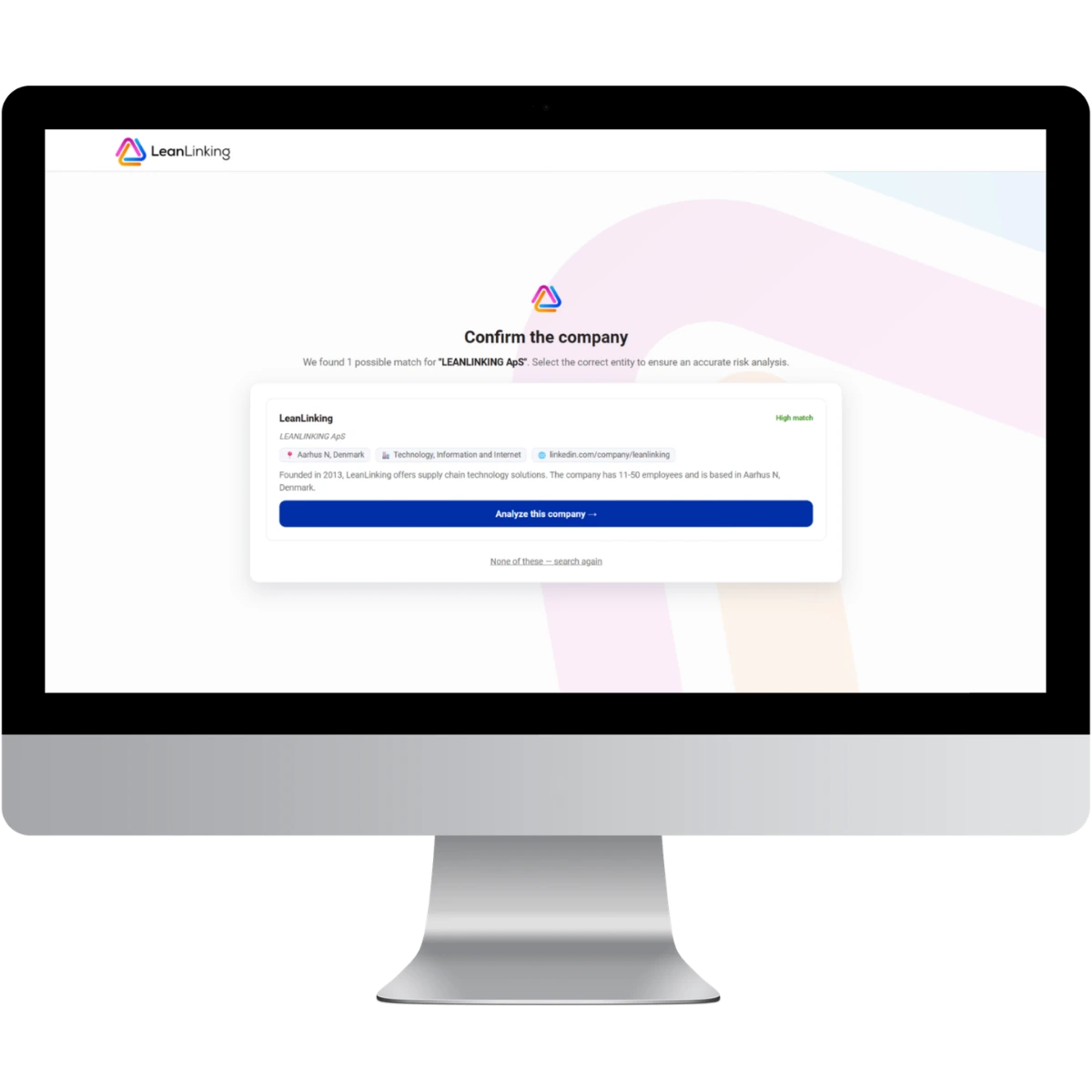
AI Risk Manager goes beyond identifying supplier risk. Automate recurring analysis, investigate how risk develops over time, and manage identified risks through structured follow-up.
Automate Supplier Risk Analysis
Configure AI Risk Manager around your supplier network and risk priorities. Choose which suppliers to analyse, select the relevant data areas, and decide whether external intelligence should be included.
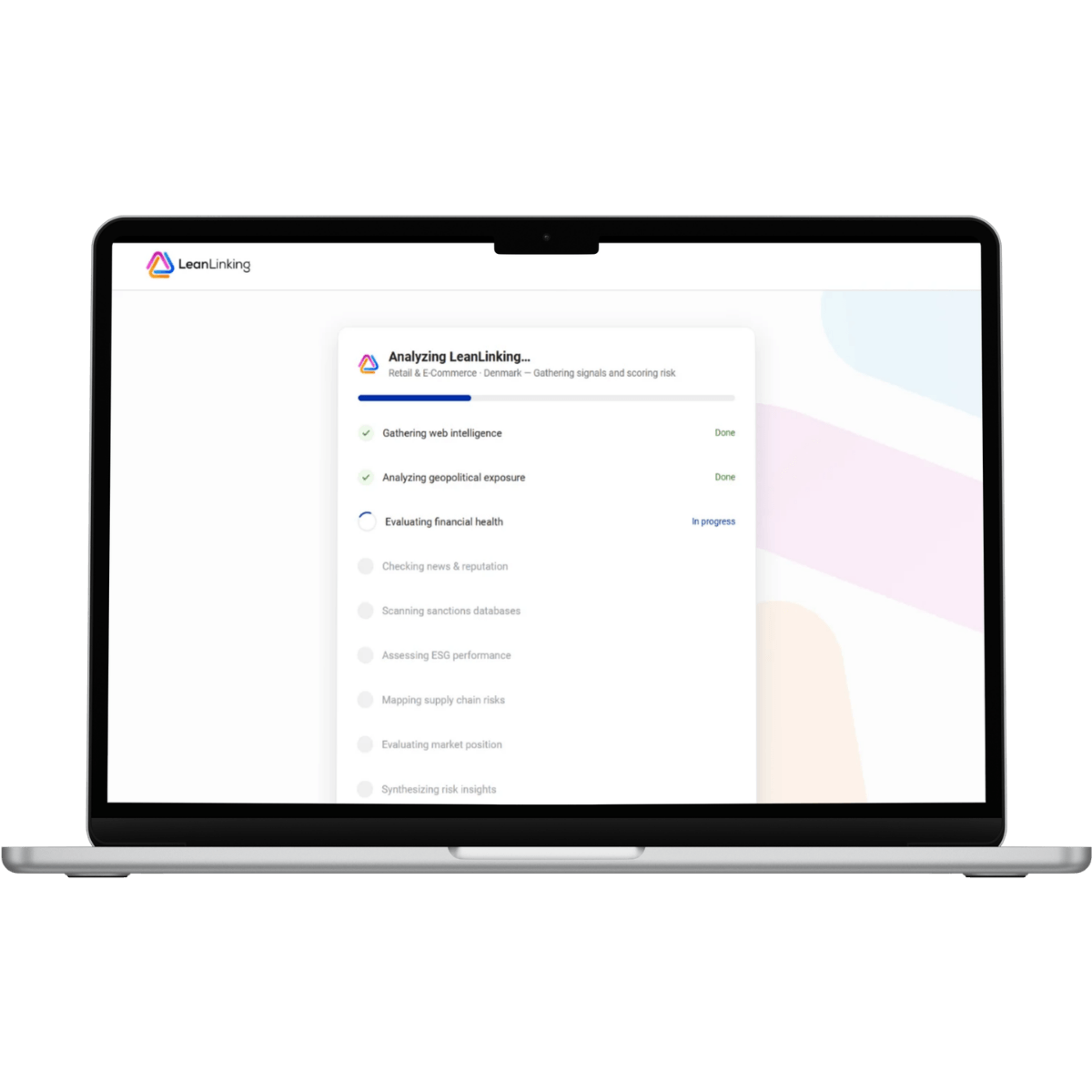
Analyses can run automatically daily, weekly, or monthly, keeping supplier risk information regularly updated without requiring a manual review each time. When an updated assessment is needed outside the normal schedule, teams can use Run Now to trigger an on-demand analysis.
AI Chat can also be enabled, allowing users to ask follow-up questions directly within a supplier’s risk profile.
Track Risk Over Time
Open any analysed supplier to explore an AI-generated executive summary, individual risk areas, specific findings, supporting data sources, and recommended actions.
A historical timeline stores previous analysis runs, making it possible to compare risk scores, levels, identified risks, and AI summaries over time. Teams can see whether a supplier’s risk profile is improving, remaining stable, or deteriorating as new analyses are completed.
AI usage is also transparent, with token consumption and cost available for individual analyses, historical runs, and cumulative usage.
Manage Risk Through Resolution
Turn identified risks into structured follow-up directly within LeanLinking. Assign responsibility for supplier risk, review individual findings, and convert AI-recommended next steps into formal actions linked to the supplier.
Each risk can be managed through its lifecycle as Open, In Progress, Resolved, or Dismissed. Teams can also view details and add comments to individual risk items, keeping discussions and follow-up connected to the risk itself.
Together with the analysis history, this creates a clear record of identified risks, how they developed, and the actions taken in response.
Stay Ahead of Supplier Risk
with AI-Powered Risk Intelligence
See how LeanLinking AI Risk Manager brings supplier data and external intelligence together to give your team a clearer, more current view of risk. Identify emerging issues, understand what is driving them, and prioritize the suppliers and risks that need attention.
Book a demo to see how LeanLinking’s AI-powered risk intelligence can support more proactive supplier risk management across your network.

Testimonials

"LeanLinking is a game changer for working with suppliers. For the first time we can close the supplier management cycle from strategy through governance to performance managements and supplier development."


"Our team loves easy to use interface; with Relations, we have managed to cut non-compliance resolution time by half, and migrated interactions with our vendors almost fully to LeanLinking."

AI Risk Manager FAQs
What supplier data does AI Risk Manager analyze?
AI Risk Manager can analyse existing risk records, non-conformance reports (NCRs), compliance information, supplier performance, scorecards, self-assessments, and product-level data available within LeanLinking.
Does AI Risk Manager use external data?
Yes, when external intelligence is enabled. AI Risk Manager can search for geopolitical signals, financial developments, and recent news relevant to your suppliers. External findings are linked to their source articles so your team can review the information behind them.
How does AI Risk Manager assess supplier risk?
AI Risk Manager analyses selected supplier data and external intelligence to produce an overall risk score and level, from Very Low to Very High. It also breaks the assessment down by risk area and identifies specific risks with probability and impact ratings, supporting sources, and recommended actions.
What happens after a supplier risk is identified?
Teams can review the finding and recommended actions, assign responsibility, and create formal follow-up actions linked to the supplier. Risks can be tracked as Open, In Progress, Resolved, or Dismissed, helping teams manage identified risks through resolution.