Supplier Performance Management Software:
Automated Scorecards for Fact-Based Governance
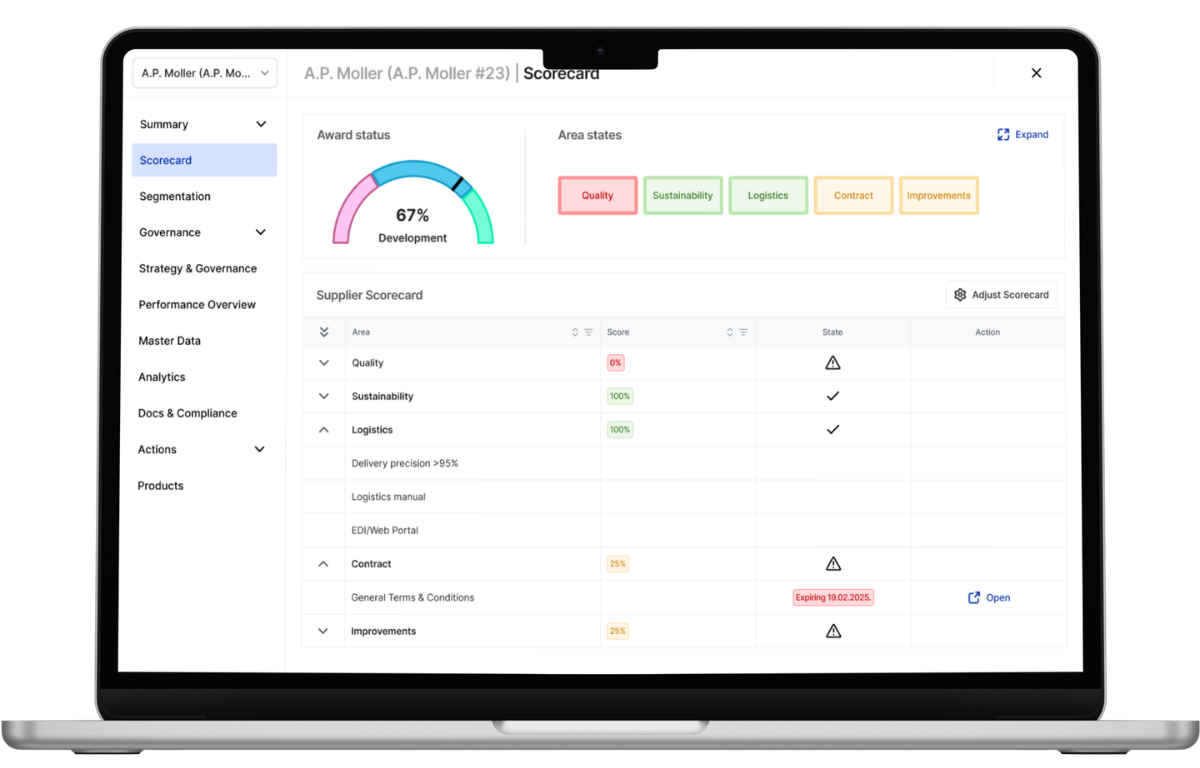
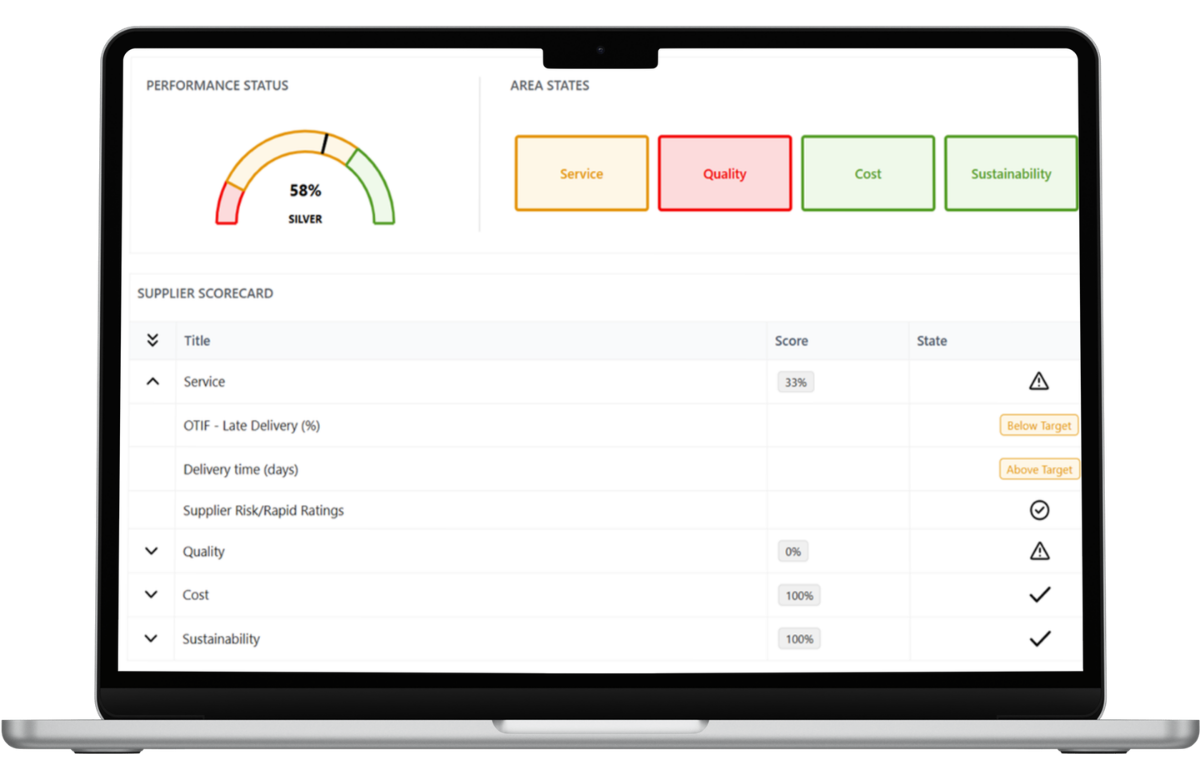
LeanLinking Supplier Performance Management Software is an evaluation engine that automates the calculation of Hard Metrics for Measuring Delivery Service (e.g., OTIF, RFT), aggregates Soft Metrics (Innovation, Cooperation, Service etc.), and generates real-time Supplier Scorecards to eliminate subjective bias.
Supplier Performance Management Software for Automated Scorecards & Fact-Based Governance
LeanLinking’s Supplier Performance Management Software automates the calculation of hard delivery metrics (OTIF, PPM, RFT), aggregates structured stakeholder feedback, and generates real-time supplier scorecards to eliminate subjective bias. Gut feeling does not scale. Spreadsheets do not enforce accountability. This is active performance governance for complex supply chains.
Automated Hard Metrics & OTIF Tracking
LeanLinking integrates directly with ERP systems including SAP, Oracle, and Microsoft Dynamics to pull delivery dates, quantities, and defect data automatically calculating OTIF, PPM defect rates, delivery reliability trends, and aggregated claims costs in real time without manual reconciliation.
Stakeholder Collaboration & Soft Metrics
LeanLinking automates structured surveys to internal stakeholders across quality, logistics, R&D, and category management enabling evaluation of supplier innovation, cooperation, communication, and responsiveness. Subjective impressions become quantifiable trend lines.
The Shared Scorecard
LeanLinking provides a shared supplier portal where vendors access their own scorecards in real time. Suppliers can dispute delivery flags directly, resolving data disagreements before business reviews replacing opinion-driven meetings with fact-based performance discussions.
The Failure of Excel Scorecards: Manual, Stale, and Siloed
Building scorecards in Excel is structurally broken. Data is outdated the moment it is exported. Local files create fragmented versions of truth. Tribal knowledge remains hidden in inboxes and hallway conversations. Without consolidated and validated metrics, performance conversations become subjective and procurement teams spend weeks preparing reports that lack credibility.
Manual vendor performance evaluation creates three systemic risks: performance data is static not live, internal feedback is undocumented, and Supplier Business Reviews become opinion-driven discussions rather than fact-based governance. The LeanLinking evaluation engine eliminates manual aggregation and enforces standardized performance calculation across categories and sites.
Static Performance Data
Scorecard data is exported once and immediately becomes outdated. Without live ERP integration, procurement teams base supplier evaluations on figures that no longer reflect current delivery or quality performance creating decisions built on stale information.
Undocumented Internal Feedback
Stakeholder impressions about supplier cooperation, responsiveness, and innovation remain locked in inboxes and hallway conversations. Without structured collection, this intelligence never enters the evaluation process and performance gaps go unaddressed.

Opinion-Driven Business Reviews
Without consolidated and validated metrics, Supplier Business Reviews become subjective discussions. Suppliers challenge data validity, meetings stall on numbers rather than improvement, and procurement loses negotiation leverage before the conversation begins.
Core Pillars of Automated Evaluation
Automated qualification functions as a structured gatekeeper. It enforces entry standards before suppliers are approved for operational engagement.
Automated Hard Metrics for Delivery quality (OTIF, Defect Rates etc.)
LeanLinking integrates directly with ERP systems such as SAP, Oracle and Microsoft Dynamics to pull delivery dates, quantities, and defect data automatically.
The platform displays:
- Service Delivery (e.g., OTIF, RFT etc.) in real time
- Parts Per Million (PPM) defect rates
- Delivery reliability trends
- Aggregated claims costs
LeanLinking eliminates spreadsheet manipulation and manual reconciliation.
DS Smith utilizes LeanLinking to drive supplier performance transparency across global manufacturing sites, replacing fragmented local reports with a unified standard.
Hard metrics become standardized, comparable, and benchmarked.
Stakeholder Collaboration & Soft Metrics
Performance is not only operational. It is behavioral.
LeanLinking automates structured surveys to internal stakeholders in:
- Quality
- R&D
- Logistics
- Category Management
With LeanLinking, stakeholders can evaluate suppliers on Innovation, Cooperation, Communication, Service and more.
Subjective impressions become quantifiable trend lines.
ITG saw significant improvement in supplier responsiveness and attitude within four months of deploying structured stakeholder feedback inside the platform.
Soft metrics transform anecdotal frustration into measurable performance development.
This hybrid model strengthens procurement analytics by incorporating relationship intelligence alongside hard operational data.
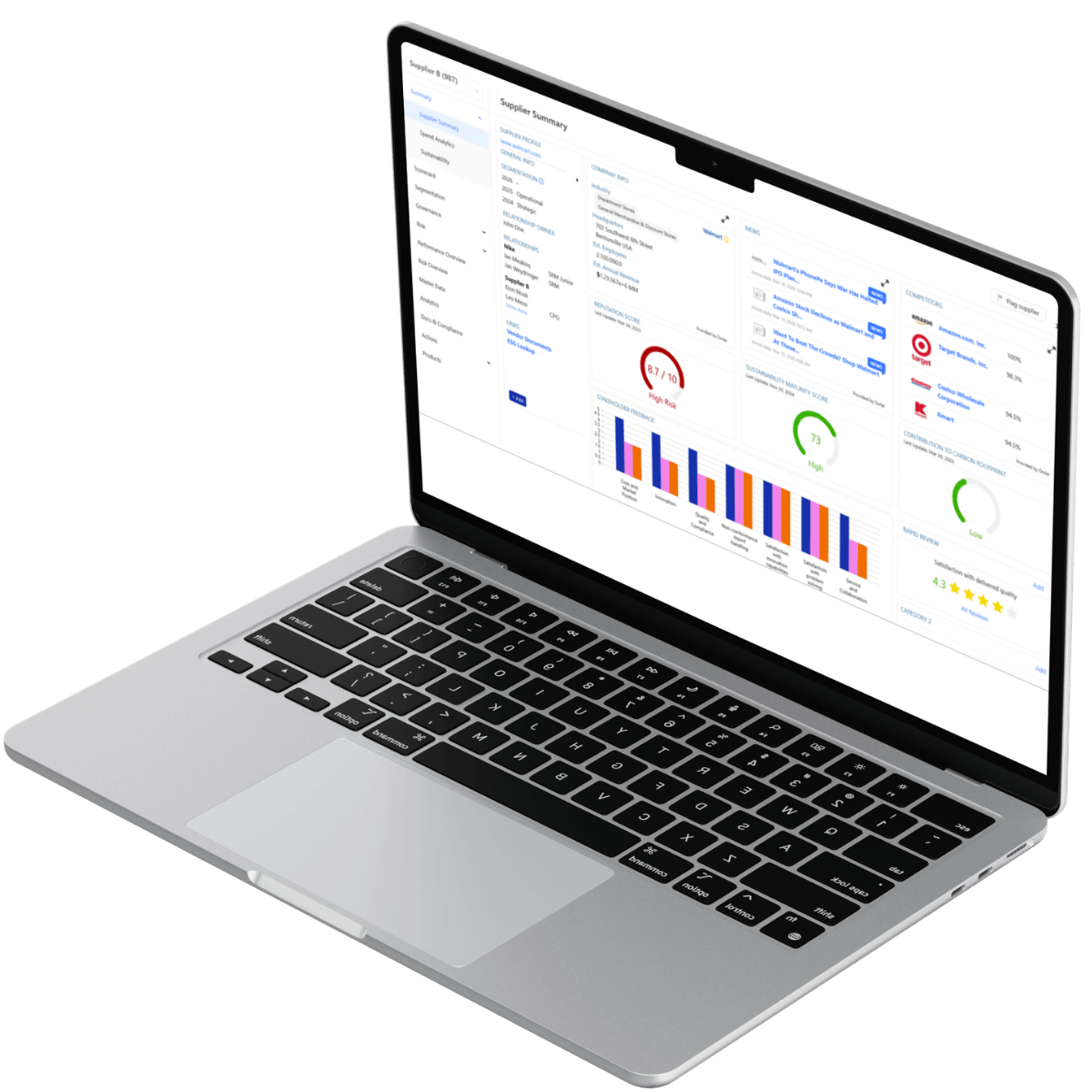
The Shared Scorecard: One Version of the Truth
Performance discussions fail when data is hidden.
LeanLinking provides a shared supplier portal where vendors access their own scorecards in real time.
If a supplier disagrees with a late delivery flag, they can dispute it directly. Resolution occurs before the business review so you don’t need to spend valuable time in meetings discussing data validity. Instead you can spend that time discussing valuable topics such as how you improve the numbers.
This enforces transparency and eliminates defensive supplier business review meetings.
A shared supplier KPI dashboard ensures:
- One standardized evaluation model
- No hidden calculations
- No manipulated metrics
- No conflicting reports
Fact-based governance replaces negotiation by opinion.
Built for Manufacturing, Retail, and Food & Beverage Efficiency
The LeanLinking Supplier Performance Management Software is engineered for high-volume, compliance-driven environments.
 Retail/FMCG
 Food & Beverage
 Manufacturing
From Data to Leverage: Fact-Based Negotiation
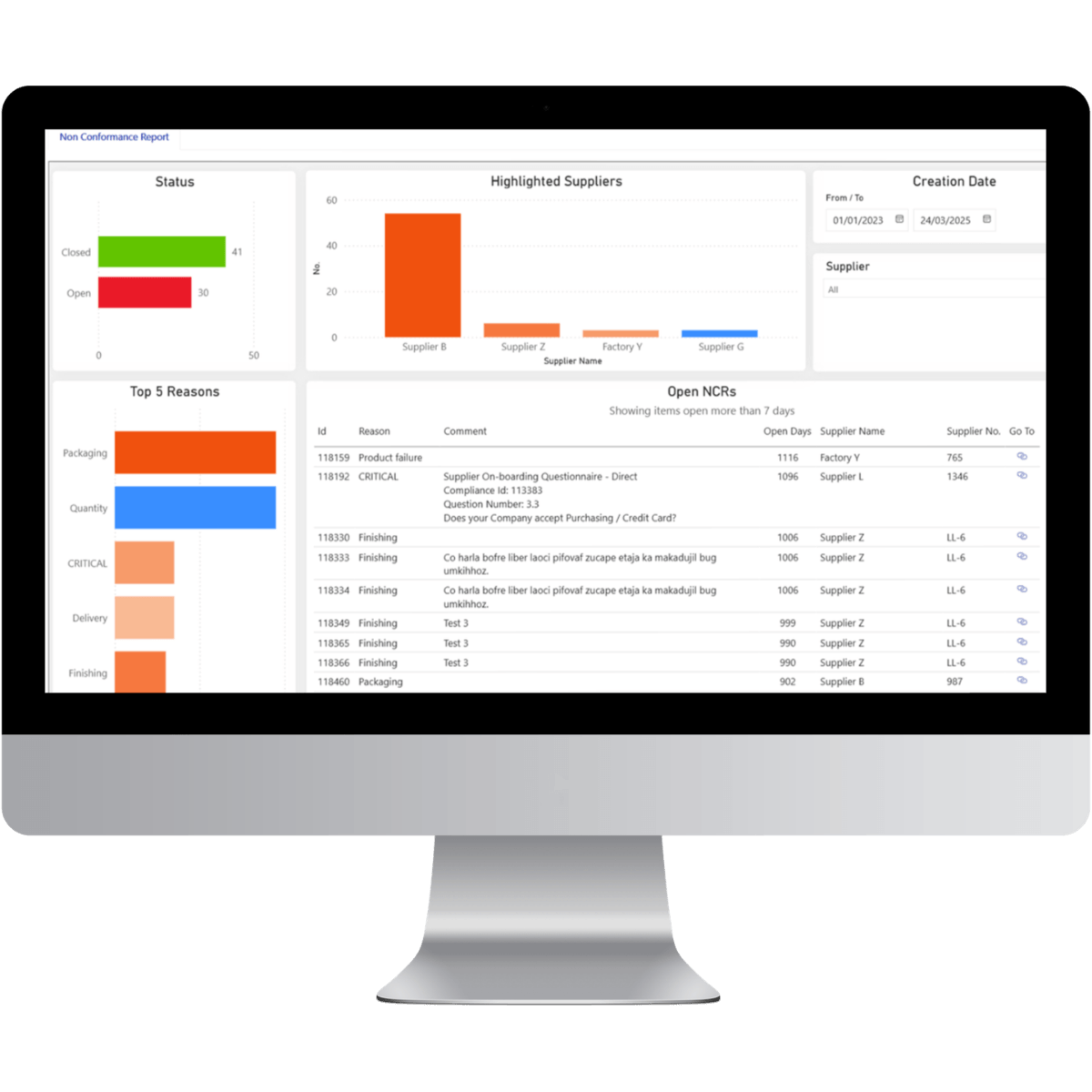
Performance data is your strongest negotiation asset. Stop accepting price increases from underperforming vendors.
LeanLinking centralizes direct access to Cost of Poor Quality trends, aggregated claims data, declining OTIF and RFT performance graphs, and long-term reliability benchmarks converting supplier evaluation into commercial advantage.
Real-Time Performance Visibility
When service delivery drops below threshold, the trend is visible immediately. LeanLinking displays declining OTIF and RFT performance graphs in real time ensuring procurement teams enter every contract renewal discussion with objective, validated data rather than anecdotal impressions.
Aggregated Claims & Cost of Poor Quality
When claims increase, the financial impact is measurable. LeanLinking centralizes aggregated claims data and Cost of Poor Quality trends into a single view giving procurement teams the evidence needed to challenge price increases and hold underperforming suppliers commercially accountable.
Long-Term Reliability Benchmarks
Pull up a supplier’s declining delivery trend line during contract renewal discussions. Use validated defect costs and reliability benchmarks as objective evidence. LeanLinking converts performance measurement into negotiation leverage ensuring fact-based governance replaces opinion at every commercial conversation.
Take Your Supplier Evaluation from Opinion-Driven Reviews to Fact-Based Performance Governance
LeanLinking replaces manual scorecards and subjective business reviews with automated supplier performance tracking, structured stakeholder feedback, and real-time KPI dashboards that convert performance data into negotiation leverage and commercial advantage.
Testimonials

"LeanLinking is a game changer for working with suppliers. For the first time we can close the supplier management cycle from strategy through governance to performance managements and supplier development."


"Our team loves easy to use interface; with Relations, we have managed to cut non-compliance resolution time by half, and migrated interactions with our vendors almost fully to LeanLinking."

Supplier Performance FAQs
What is the difference between hard metrics and soft metrics in supplier performance management?
Traditional systems capture orders and invoices. They do not measure cooperation, responsiveness, or innovation. LeanLinking bridges this gap by combining quantitative ERP data with structured stakeholder input into one unified evaluation framework.
Hard Metrics (ERP-Derived) include OTIF (On-Time In-Full), PPM (Parts Per Million), Fill Rate, Delivery Reliability, and Cost of Poor Quality (Claims). Soft Metrics (Stakeholder-Derived) include Innovation Contribution, Cooperation & Communication, Responsiveness, Issue Resolution Quality, and Strategic Alignment.
ERPs measure transactions. They do not quantify relationships. LeanLinking aggregates both dimensions into a single supplier KPI dashboard, producing a 360-degree view that is objective and can be automatically shared with suppliers.
To understand how this integrates with your existing technology stack, read our guide on [LeanLinking vs. ERP Modules].