SRM Software for Wholesale:
Margin Protection and Delivery Reliability
LeanLinking is a specialized SRM Software for Wholesale that centralizes supplier master data, automates performance tracking, and strictly enforces specific measuring delivery service (e.g., OTIF, RFT) to protect profits and prevent stockouts across high-volume distribution networks.
Purpose-Built SRM Software for Wholesale: Margin Protection & Delivery Reliability
LeanLinking is a specialized SRM Software for Wholesale that centralizes supplier master data, automates performance tracking, and strictly enforces delivery service metrics (e.g., OTIF, RFT) to protect profits and prevent stockouts across high-volume distribution networks. The platform aggregates logistics oversight metrics, measures supplier performance using exact delivery service data, fill rates, order accuracy, and lead time adherence transforming fragmented supplier data into enforced accountability.
Automated Scorecards & Delivery Service Enforcement
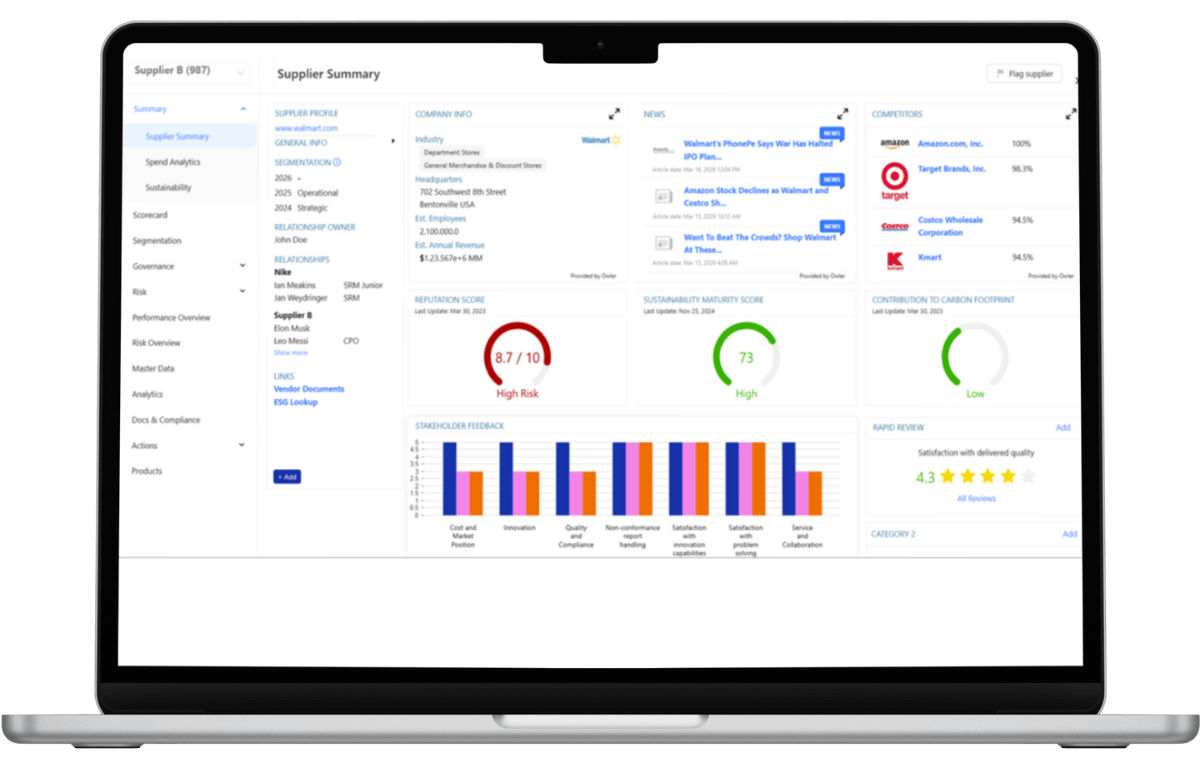
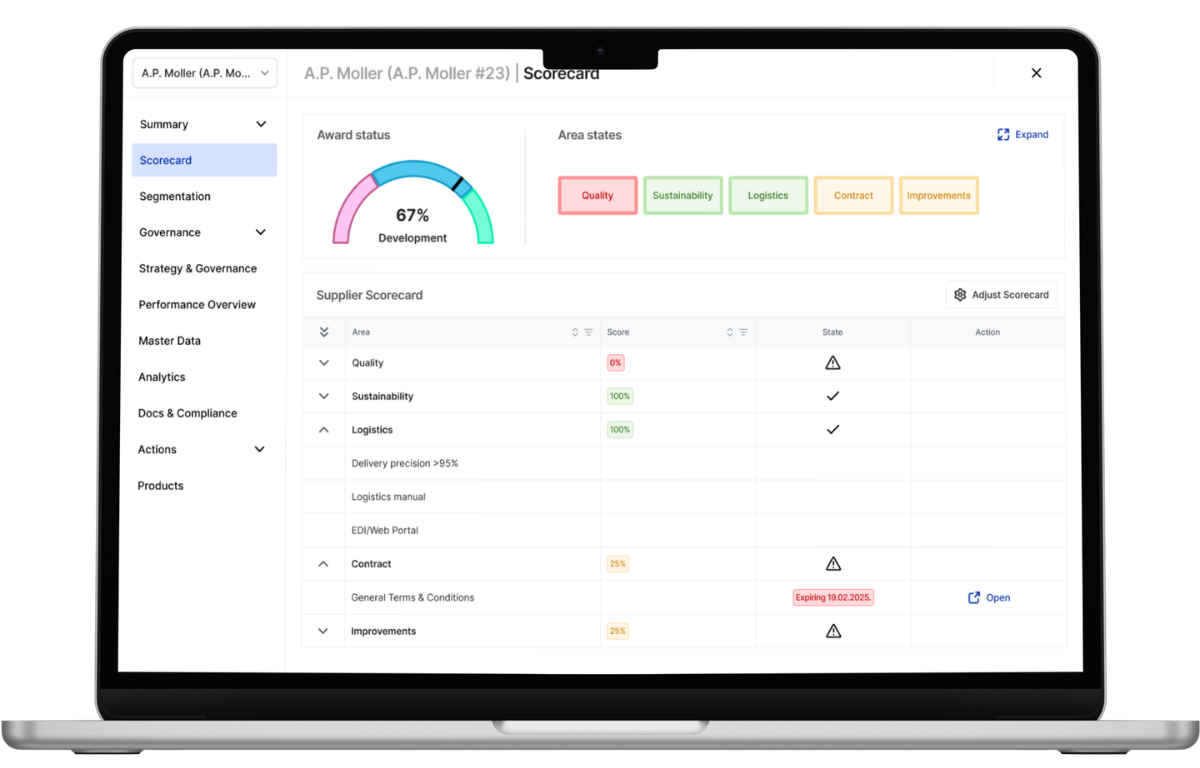
LeanLinking aggregates real-time ERP data to display delivery service metrics (OTIF, RFT), fill rates, lead time variance, order accuracy percentages, and recurring deviation frequency giving category managers validated supplier performance across the entire supply base to identify underperforming vendors instantly.
Centralized Defect Management & Claim Resolution
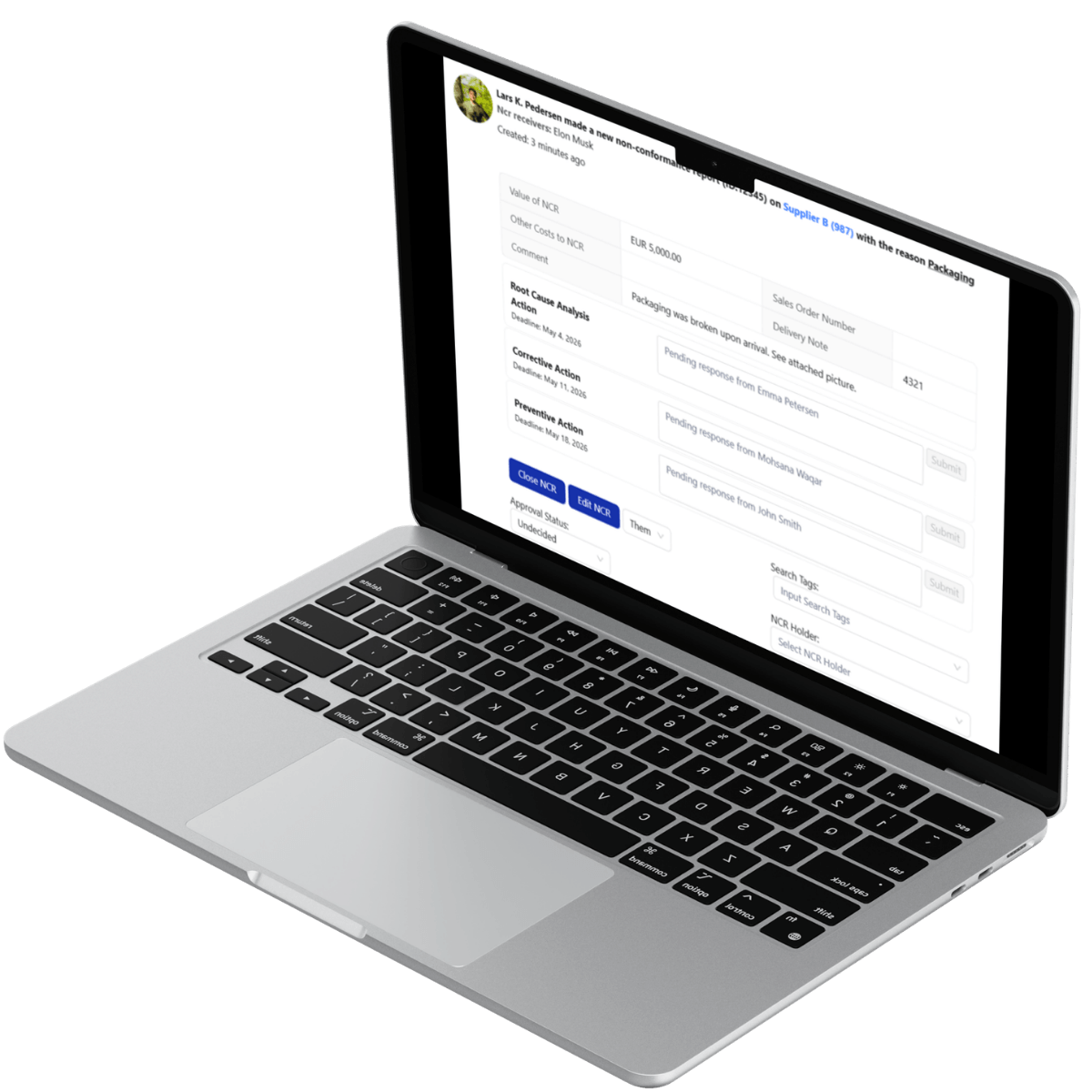
LeanLinking digitizes Non-Conformance Reports for damaged goods, incorrect SKU shipments, partial deliveries, missed SLAs, and late shipments. Suppliers cannot ignore deviation tickets resolution timelines are tracked, recurrence patterns are documented, and financial claims are structured for cost recovery.
Fact-Based Negotiations & Financial Leverage
LeanLinking provides category managers with immediate access to historical OTIF and RFT performance, lead time adherence trends, fill rate volatility, and open NCR history converting supplier performance data into commercial ammunition that shifts negotiations from relational arguments to factual analysis.
The Failure of Manual Management: Hidden Logistics Costs and Stockouts
High-volume distribution cannot operate on decentralized spreadsheets and inbox-driven communication. When delivery delays remain buried in email threads and inconsistent fill rates sit in disconnected reports, procurement loses oversight of logistics performance. The consequences are structural: chronic stockouts that disrupt sales cycles, declining fill rates that weaken customer trust, expedited freight costs that destroy margin protection, inventory imbalances that reduce turnover efficiency, and unrecovered claims from damaged or incorrect shipments. Excel does not enforce delivery performance. Email does not highlight recurring performance failures. Shared drives do not aggregate supplier performance metrics across categories.
In high-volume distribution environments, minor deviations scale into major financial exposure. A consistent 2–3% drop in OTIF directly impacts service levels to customers. A recurring 1-day lead time variance increases safety stock requirements. Repeated incorrect shipments create operational friction and administrative cost. Manual oversight produces reactive firefighting buyers respond after stockouts occur, logistics teams escalate after customers complain, and finance absorbs margin leakage without root cause transparency. Without automated enforcement of delivery service metrics, wholesale procurement operates blindly.

No Delivery Performance Enforcement
OTIF failures, fill rate declines, and lead time variances are buried in disconnected reports with no automated escalation. Procurement teams discover logistics failures only after stockouts have disrupted sales cycles and customers have already absorbed the service impact.

No Defect or Claims
Governance
Damaged goods, incorrect shipments, and missed SLAs are handled through informal email complaints with no structured resolution process. Claims go unrecovered, recurrence patterns go undocumented, and margin leakage continues without root cause transparency or financial accountability.

No Supplier Accountability Structure
Without consolidated performance data and structured escalation workflows, supplier accountability relies on relationship history rather than operational facts. Recurring deviations go unresolved, expedited freight costs accumulate invisibly, and procurement loses negotiation leverage before commercial discussions begin.
Core Pillars of Wholesale Supplier Governance
Wholesale supplier governance requires disciplined control across delivery service enforcement, defect management, and margin protection across high-volume distribution networks.
Automated Scorecards for Measuring Delivery Service (e.g., OTIF, RFT)
To eliminate subjective vendor reviews, wholesale distributors can deploy automated Supplier Performance Management Software that measures exact supplier performance.
On LeanLinking, aggregated real-time ERP data are displayed:
- Delivery service (e.g., OTIF, RFT)
- Fill rates
- Lead time variance
- Order accuracy percentages
- Recurring deviation frequency
These automated scorecards eliminate opinion-based evaluations. Category Managers see validated supplier performance across their entire supply base.
Underperforming suppliers are identified instantly. High-performing vendors are distinguished by measurable delivery consistency. Procurement leaders segment suppliers by operational reliability rather than relationship history.
This structured measurement model enables:
- Accurate supplier ranking
- Performance-based sourcing decisions
- Data-backed supplier rationalization
- Continuous delivery reliability oversight
In wholesale environments where product availability drives revenue, precise delivery service measurement defines competitive advantage.
Centralized Defect Management and Claim Resolution
Stop margin leakage by enforcing strict Supplier Quality Management Software workflows that trace every damaged delivery or incorrect shipment back to the responsible vendor.
LeanLinking digitizes Non-Conformance Reports (NCRs) for supplier delivery failures such as:
- Damaged goods during transport
- Incorrect number of SKU shipments
- Partial deliveries
- Missed Service Level Agreements (SLAs)
- Late shipments
The platform mandates structured corrective action processes. Suppliers cannot ignore deviation tickets. Resolution timelines are tracked. Recurrence patterns are documented.
This centralized governance framework eliminates informal complaint handling and replaces it with traceable facts.
Financial impact is measured. Claims are documented. Cost recovery is structured.
By institutionalizing defect management within wholesale supplier management workflows, LeanLinking prevents silent margin erosion caused by unresolved supply chain failures.
Fact-Based Negotiations and Financial Leverage
Category Managers use consolidated supplier performance data to drive Procurement Negotiations, ensuring commercial discussions reflect operational reality.
When suppliers request price increases, LeanLinking provides immediate access to:
- Historical OTIF and RFT performance
- Lead time adherence trends
- Fill rate volatility
- Open and recurring NCR history
- Delivery reliability scoring
Negotiations shift from relational arguments to factual analysis.
If a supplier delivery service (e.g., OTIF, RFT) falls below agreed standards, procurement teams present quantified performance evidence. If recurring deviations increase administrative cost or expedite freight expense, these costs are traceable and provide strong arguments for the negotiation.
Fact-based negotiation strengthens leverage in high-volume distribution environments where pricing sensitivity directly impacts margin protection.
Performance data becomes commercial ammunition.
Transition to the Operational Supplier Cockpit
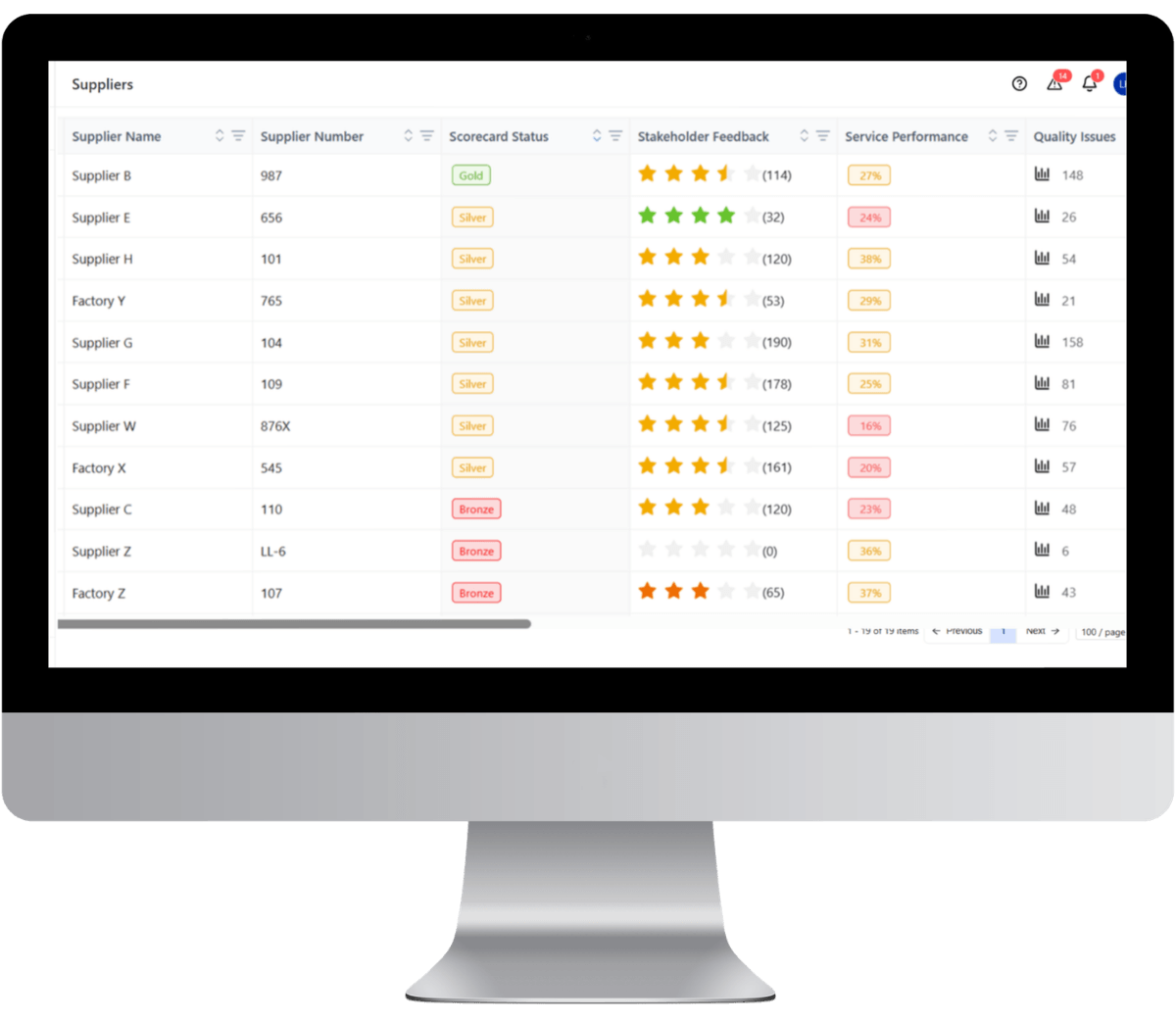
Wholesale procurement teams managing high-volume distribution networks require centralized governance infrastructure. To execute structured logistics oversight at scale, protect low-margin business models, and eliminate data silos, organizations must replace fragmented spreadsheets with a centralized Supplier Cockpit that enforces delivery accountability continuously. SRM Software for Wholesale is not an administrative convenience. It is a structural control system for margin protection in distribution-intensive environments.
Automated Delivery Service Enforcement
LeanLinking centralizes supplier master data and enforces delivery service metrics including OTIF and RFT across the entire supplier base. Supplier delivery performance updates automatically, deviation trends surface before systemic risk escalates, and category managers gain continuous visibility into logistics reliability enabling proactive sourcing decisions before downstream customer impact occurs.
Defect Management & Margin Protection
LeanLinking digitizes and automates defect management workflows across damaged goods, incorrect shipments, and missed SLAs. Claims are documented, resolution timelines are tracked, and recurrence patterns are institutionalized within wholesale supplier management workflows preventing silent margin erosion caused by unresolved supply chain failures.
Fact-Based Negotiation Leverage
LeanLinking strengthens procurement negotiation leverage by providing immediate access to historical OTIF and RFT performance, fill rate volatility, lead time adherence trends, and open NCR history. In high-volume wholesale models, supplier delivery reliability defines commercial resilience. LeanLinking enforces it.
Take Your Wholesale Supplier Management from Reactive Firefighting to Enforced Delivery Reliability
LeanLinking replaces decentralized spreadsheets and inbox-driven logistics tracking with automated delivery service enforcement, centralized defect management, and fact-based negotiation leverage that protects margins and eliminates stockouts across high-volume distribution networks.
Testimonials

"LeanLinking is a game changer for working with suppliers. For the first time we can close the supplier management cycle from strategy through governance to performance managements and supplier development."


"Our team loves easy to use interface; with Relations, we have managed to cut non-compliance resolution time by half, and migrated interactions with our vendors almost fully to LeanLinking."

Pharmaceutical Compliance FAQs
Why can't ERP systems protect margins or enforce delivery reliability in wholesale procurement?
ERP systems such as SAP, Oracle, and Microsoft Dynamics function as Systems of Record. They process purchase orders. They record goods receipts. They manage inventory balances. They generate financial postings. They do not enforce supplier delivery service or quality. ERP platforms capture transactional history they do not measure supplier service levels as an operational governance framework, escalate recurring OTIF failures, or enforce corrective action for repeated logistics deviations.
LeanLinking operates above the ERP as an active System of Engagement. It aggregates ERP logistics data and converts it into enforceable performance standards shared directly with relevant suppliers. Where ERP records what happened, LeanLinking governs what must happen. Transactional systems track inventory. LeanLinking protects profit.
How does LeanLinking protect margins through continuous logistics oversight in wholesale distribution?
Wholesalers and distributors operate under structural constraints: low margins, high order frequency, tight lead times, rapid inventory turnover, and immediate service expectations. Supplier reliability directly influences net margin stability. LeanLinking enforces logistics oversight continuously supplier delivery service metrics update automatically, supplier performance becomes visible across categories, and deviation trends surface before systemic risk escalates.
This operational transparency supports proactive sourcing decisions, improved inventory planning accuracy, reduced expedited freight reliance, lower safety stock requirements, and enhanced service level consistency. Margin protection in wholesale does not originate from price negotiation alone. It also originates from delivery tracking and management.