SRM Software for Chemicals:
Automating Regulatory Documentation
and Risk Oversight
LeanLinking is a specialized SRM Software for Chemicals that centralizes supplier master data, automates the lifecycle of regulatory documents (e.g., REACH, SDS), and strictly enforces hazardous material governance to mitigate environmental and safety risks across complex chemical supply chains.
Purpose-Built SRM Software for Chemicals: Regulatory Documentation & Hazardous Material Governance
LeanLinking is a specialized SRM Software for Chemicals that centralizes supplier master data, automates the lifecycle of regulatory documents (e.g., REACH, SDS), and strictly enforces hazardous material governance to mitigate environmental and safety risks across complex chemical supply chains. The platform aggregates regulatory compliance documentation, enforces document expiry monitoring, and blocks non-compliant suppliers before hazardous materials enter the supply chain.
Automated Scorecards & Shelf Availability Enforcement
LeanLinking aggregates ERP output to report on supplier delivery service metrics (OTIF, fill rates), defect rates, supplier margins, and sustainability scores giving category managers objective visibility to identify unreliable vendors instantly and activate contingency sourcing before out-of-stocks occur.
Digital Audits & Objective Performance Scorecards
LeanLinking consolidates environmental compliance audit outcomes, CAPA completion timelines, delivery service metrics, recurring deviation frequency, and regulatory document validity into objective supplier scorecards giving HSE Directors and Heads of Compliance continuous visibility into chemical supply chain risk exposure.
Deviation Governance & Safety Incident Management
LeanLinking digitizes Non-Conformance Reports for contaminated chemical batches, incorrect hazard labeling, damaged packaging, and missing transport documentation. Suppliers must submit documented Root Cause Analysis and Corrective and Preventive Actions before deviation closure maintaining strict HSE adherence across the chemical supply chain.
The Failure of Manual Management: Hidden Hazards and Compliance Blind Spots
Managing chemical suppliers via decentralized Excel spreadsheets and email threads creates severe operational blind spots. When critical compliance documentation such as REACH declarations and ISO 14001 certificates expires unnoticed in a buyer’s inbox, the organization faces audit findings, regulatory fines, supply chain disruptions, blocked production due to missing documentation, environmental compliance breaches, and profound HSE hazards. Spreadsheets do not enforce document validity. Email threads do not escalate expiring Safety Data Sheets. Shared folders do not maintain audit trails.
In hazardous material procurement environments, even a single expired certificate exposes the organization to significant chemical supply chain risk. Missing REACH documentation disrupts imports. Invalid quality certificates compromise quality compliance. Outdated SDS documentation creates unsafe handling conditions. Manual tracking validates the illusion of control it does not enforce compliance. Without structured supplier compliance tracking software embedded into procurement governance, organizations remain vulnerable to invisible regulatory exposure.
No Regulatory Document Validity Enforcement
REACH declarations, Safety Data Sheets, and ISO 14001 certificates expire unnoticed in shared folders and buyer inboxes. Without automated expiry tracking and escalation, compliance lapses go undetected until an auditor requests documentation that is no longer valid.

No HSE Hazard Escalation
Outdated SDS documentation creates unsafe handling conditions across hazardous material procurement workflows. Without structured escalation workflows, safety compliance breaches remain invisible until they trigger regulatory fines, production stoppages, or environmental incidents.

No Audit Trail or Traceability
Shared folder structures and email threads cannot maintain unalterable audit trails. When regulators request documentation history, fragmented records create compliance gaps exposing organizations to enforcement actions that structured governance would have prevented.
Core Pillars of Chemical Supplier Governance
Chemical supplier governance requires disciplined control across regulatory document validity, hazardous material compliance, and deviation resolution across complex chemical supply chains.
Pre-Qualification and Automated Environmental Compliance
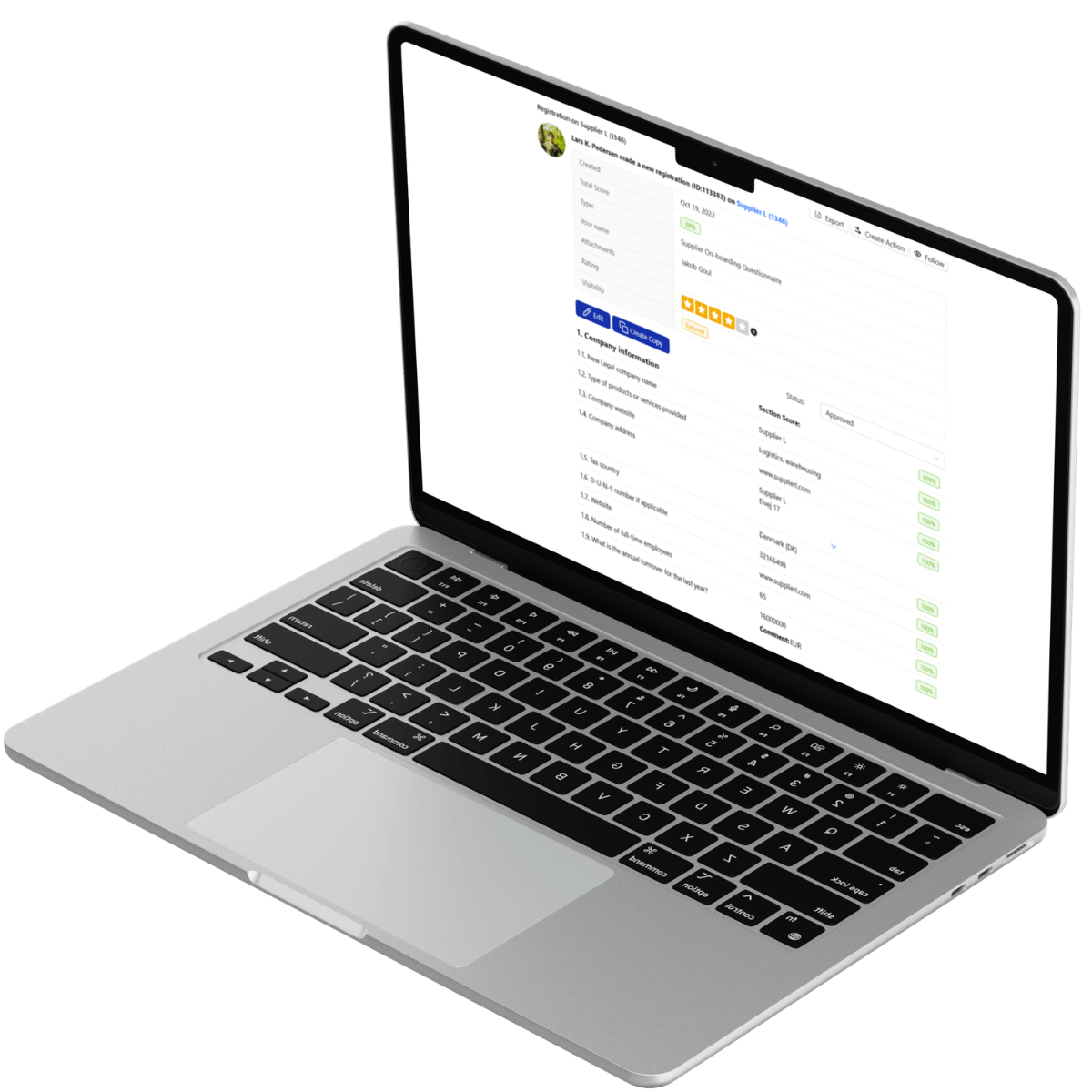
Eliminate high-risk vendors before engagement by deploying automated Supplier Onboarding Software that strictly enforces a “No Documentation, No PO” standard for hazardous materials and chemicals.
LeanLinking enforces the structured collection of mandatory quality certificates (e.g., ISO 14001) and regulatory documents (e.g., REACH declarations, Safety Data Sheets (SDS)) before supplier activation.
The platform automates:
- Document collection workflows
- Expiry tracking with escalation alerts
- Validation of regulatory completeness
- Traceability of document revisions
- Unalterable audit trail documentation
Suppliers cannot proceed without valid documentation. Expired certificates trigger automated alerts. Compliance lapses cannot bypass procurement controls.
This governance framework transforms hazardous material procurement software from passive documentation storage into active compliance enforcement.
Digital Audits and Objective Performance Scorecards
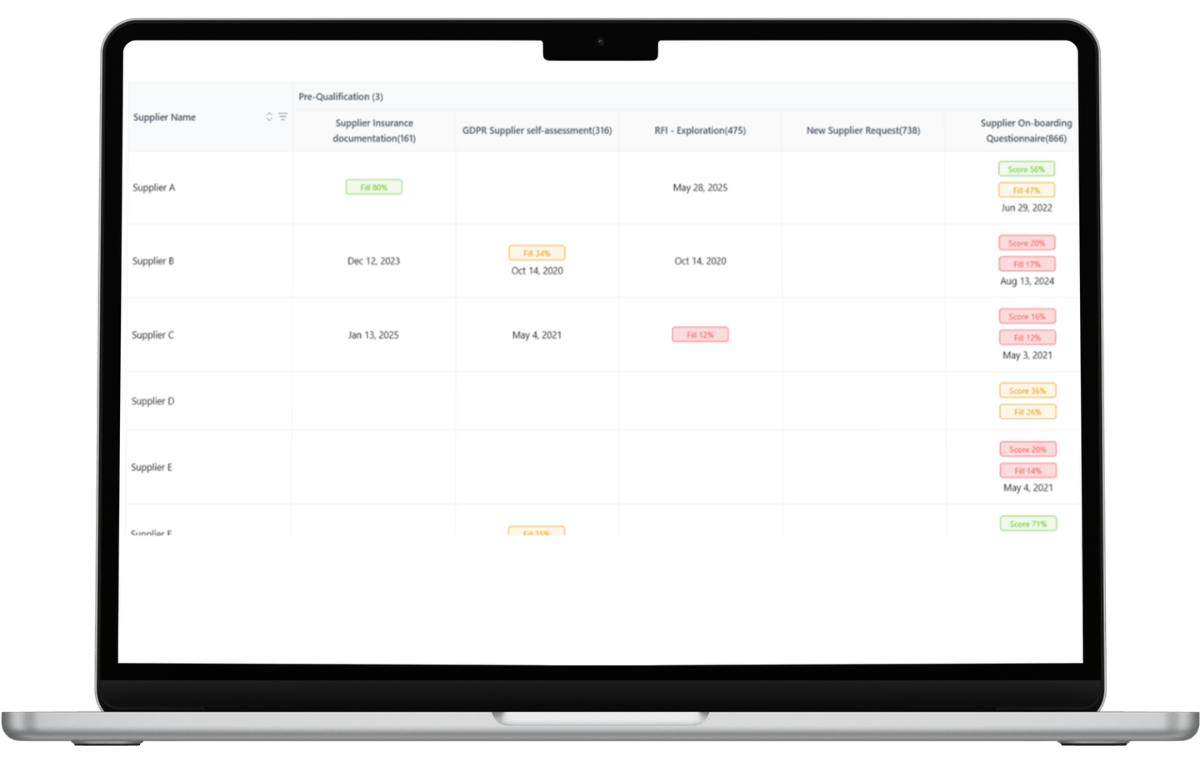
Transform static annual ESG reporting into continuous oversight by utilizing automated Sustainability Software that monitors supplier audit results and tracks Scope 3 emissions exposure.
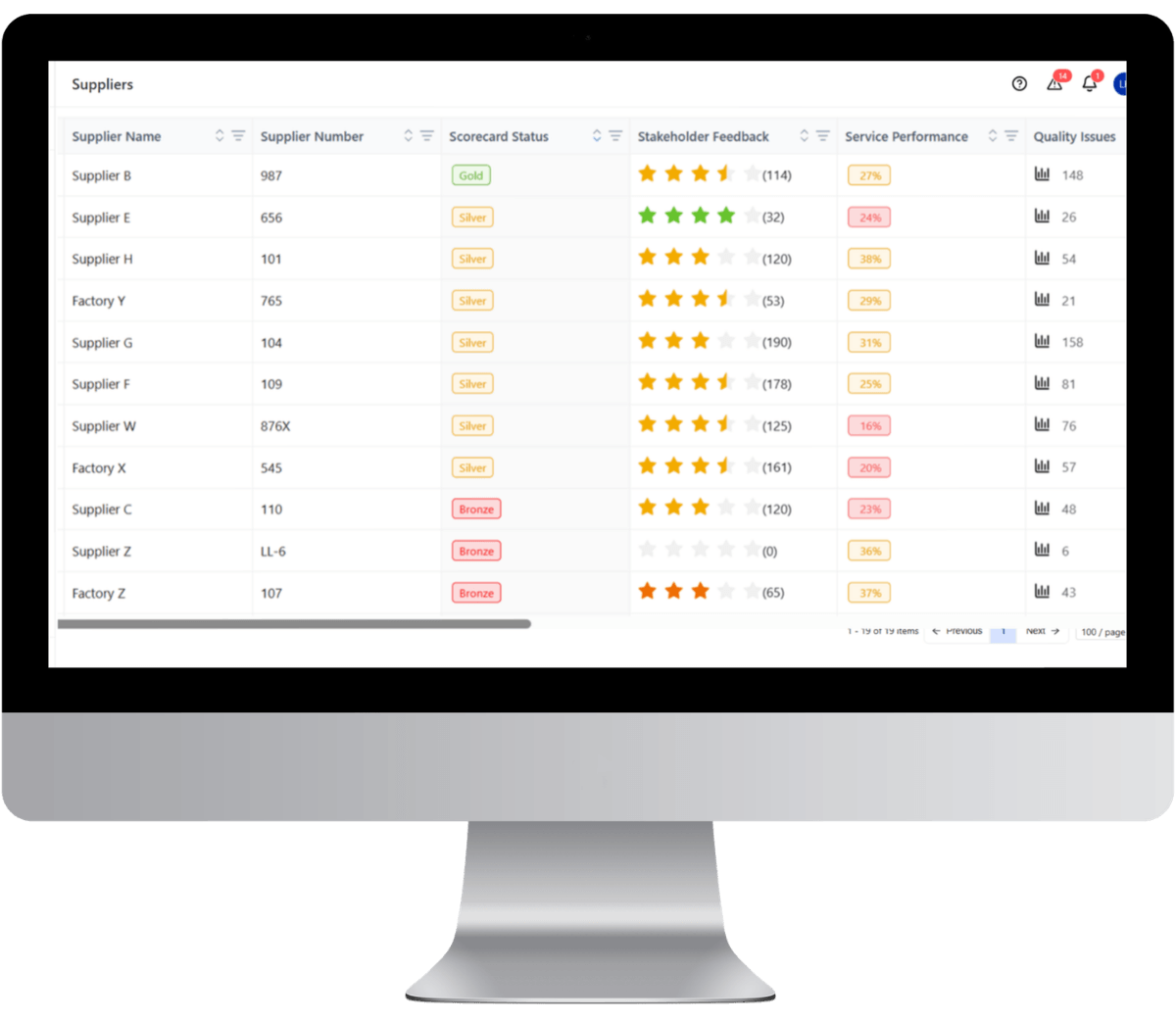
LeanLinking consolidates hard performance metrics with safety audit data to create an objective supplier scorecard based on risk and reliability.
The platform aggregates:
- Environmental compliance audit outcomes
- CAPA completion timelines
- Delivery service metrics (e.g., OTIF)
- Recurring deviation frequency
- Regulatory document validity status
HSE Directors and Heads of Compliance gain continuous visibility into chemical supply chain risk exposure. Suppliers are segmented according to regulatory adherence, safety performance, and operational reliability.
This governance framework eliminates annual audit dependency and replaces it with real-time compliance oversight.
Deviation Governance: NCRs and Safety Incident Management
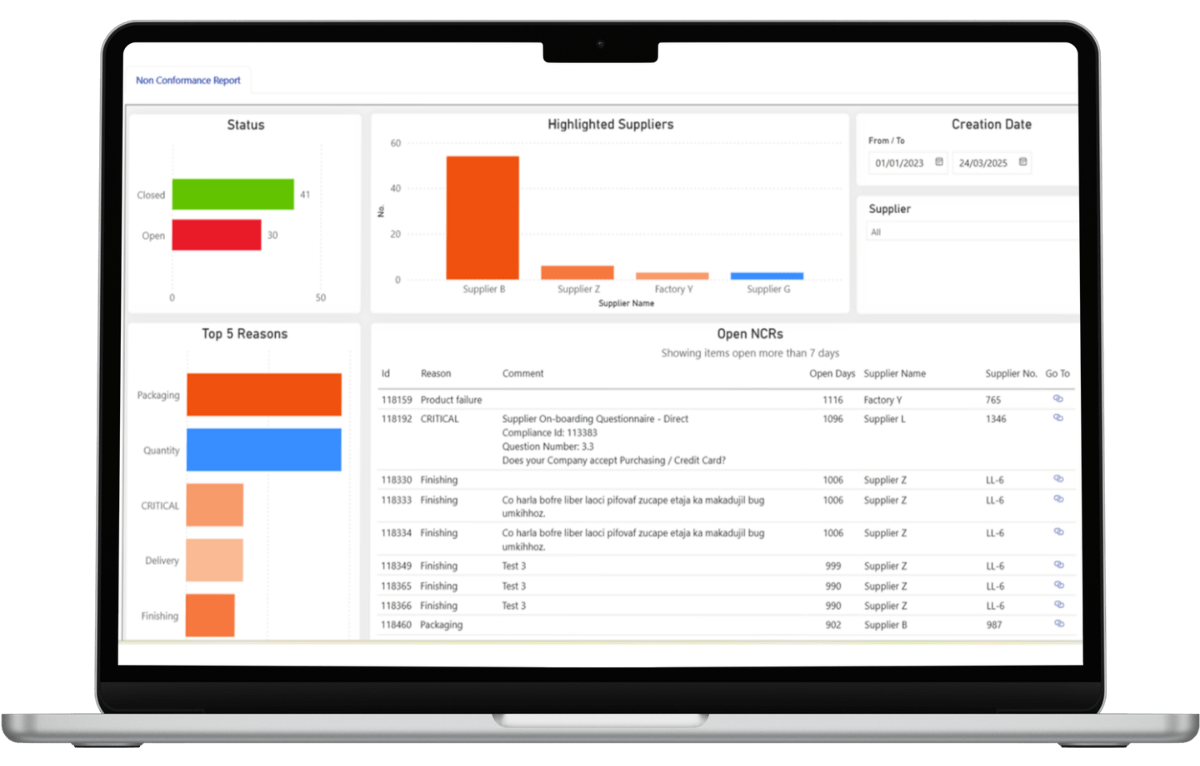
Trace every material’s non-conformance or packaging failure directly to the root cause using structured Supplier Quality Management Software workflows.
LeanLinking digitizes Non-Conformance Reports (NCRs) for issues including:
- Contaminated chemical batches
- Incorrect hazard labeling
- Damaged packaging of hazardous materials
- Missing transport documentation
- Breaches of safe handling protocols
Suppliers cannot ignore deviations. The system requires documented Root Cause Analysis (RCA) and enforces Corrective and Preventive Actions (CAPA) before closure.
Every deviation generates:
- Timestamped traceability records
- Linked supplier documentation
- Escalation workflows
- Audit-ready compliance logs
This structured deviation governance model strengthens chemical vendor management system controls and maintains strict HSE adherence across the chemical supply chain.
Transition to the Operational Supplier Cockpit
Chemical procurement teams operating within hazardous material environments require a centralized governance infrastructure. To execute regulatory enforcement at scale, maintain strict environmental compliance, and eliminate documentation blind spots, organizations must replace fragmented spreadsheets and folder structures with a centralized Supplier Cockpit that enforces safety and performance continuously. SRM Software for Chemical companies is not an administrative convenience. It is a hazardous material governance system that enforces regulatory discipline and protects operational continuity.
Regulatory Document Lifecycle Automation
LeanLinking centralizes supplier master data and automates the lifecycle of regulatory documents including REACH declarations, Safety Data Sheets, and quality certificates. Expiry tracking, automated escalation alerts, and document revision traceability ensure compliance documentation remains valid and audit-ready before hazardous materials enter operational workflows.
NCR & Corrective Action Enforcement
LeanLinking digitizes Non-Conformance Reports and enforces structured Corrective and Preventive Action workflows across contaminated batches, hazard labeling failures, and transport documentation breaches. Every deviation generates timestamped traceability records, linked supplier documentation, and audit-ready compliance logs. In chemical supply chains, compliance is not optional. It is enforceable.
Unalterable Audit Trails & Chemical Supply Chain Risk Mitigation
LeanLinking maintains unalterable audit trails across all supplier documentation, deviations, and corrective actions ensuring regulatory review requests are met with complete, timestamped, and retrievable compliance records. When hazardous materials move through supply chains without enforced documentation, governance exposure multiplies. LeanLinking blocks exposure.
Take Your Chemical Supplier Management from Documentation Blind Spots to Enforced Regulatory Compliance
LeanLinking replaces fragmented spreadsheets and shared folder structures with automated regulatory document lifecycle management, structured NCR and CAPA enforcement, and unalterable audit trails that mitigate chemical supply chain risk and maintain strict HSE compliance across hazardous material procurement workflows.
Testimonials

"LeanLinking is a game changer for working with suppliers. For the first time we can close the supplier management cycle from strategy through governance to performance managements and supplier development."


"Our team loves easy to use interface; with Relations, we have managed to cut non-compliance resolution time by half, and migrated interactions with our vendors almost fully to LeanLinking."

Pharmaceutical Compliance FAQs
Why can't ERP systems govern chemicals and hazardous materials procurement?
ERP systems such as SAP and Oracle function as Systems of Record. They process financial transactions. They record inventory volumes. They manage purchase orders. They do not enforce supplier safety standards. They do not validate document expiry. They do not block non-compliant hazardous materials.
Transactional systems track quantities and costs. They do not govern regulatory validity or safe handling protocols. LeanLinking operates above the ERP as an active System of Engagement mandating compliance and blocking non-compliant suppliers before hazardous materials or chemicals enter operational workflows. Where ERP captures data retrospectively, SRM Software for Chemicals enforces compliance proactively.
How does LeanLinking enforce chemical supply chain risk and traceability across hazardous material procurement?
LeanLinking enforces traceable document lifecycle management for REACH declarations, SDS, and quality certificates, structured corrective actions for safety deviations, supplier master data governance, and unalterable audit trails for regulatory review. This systemized oversight protects organizations from environmental and safety compliance breaches and regulatory enforcement actions. When hazardous materials move through supply chains without enforced documentation, governance exposure multiplies. LeanLinking blocks exposure